Annual exams are a significant part of the academic cycle in ICSE schools, but the examination process is very different from boards that rely primarily on memorisation. ICSE emphasises understanding, application, structured writing, and conceptual clarity. This approach shapes how the annual exams are conducted across all grades.
For parents in Tamil Nadu—especially in regions like Kumbakonam where ICSE education is steadily gaining attention—knowing how ICSE schools organise annual exams can help them better prepare their children for the academic flow. This article explains the step-by-step structure, purpose, and methodology behind ICSE annual examinations.
Best School in Kumbakonam
Annual Exams Are Part of a Larger Evaluation System
ICSE schools do not treat annual exams as the only assessment of student performance. Instead, annual exams form one layer within a comprehensive evaluation framework that includes:
- Regular unit tests
- Formative assessments
- Project work
- Practical evaluations
- Periodic internal assessments
This balanced approach allows teachers to understand student progress throughout the year, preventing last-minute performance pressure.
Exam Syllabus Planned Through a Structured Academic Calendar
Each ICSE school follows a clearly defined academic calendar designed to ensure complete syllabus coverage without rushing. Annual exam portions are finalised through:
- Well-sequenced lesson plans
- Regular revision cycles
- Topic-wise checklist tracking
- Teacher coordination meetings
By the time annual exams arrive, students are already familiar with the structure and content, reducing stress.
Emphasis on Conceptual and Application-Based Questions
Unlike exam systems that focus heavily on direct recall, ICSE annual exams emphasise understanding.
Questions generally test:
- Interpretation
- Reasoning
- Application of principles
- Analytical skills
- Structured writing
This prepares students not only for board exams but also for competitive exams and academic challenges later in life.
Descriptive Answer Writing Is Encouraged
ICSE exams typically include questions requiring explanatory and detailed answers. Students are trained throughout the year to:
- Provide clear introductions and conclusions
- Use step-by-step reasoning
- Present organised explanations
- Support answers with examples or diagrams
These writing skills build confidence and help students express concepts more effectively.
Practical Assessments for Science and Application Subjects
For classes in higher primary and secondary levels, annual exams may include practical components in subjects like:
- Physics
- Chemistry
- Biology
- Computer applications
Practical exams test observation skills, procedural understanding, and the ability to apply theory in controlled environments.
Pre-Exam Revisions and Mock Tests Strengthen Preparation
Most ICSE schools conduct revision periods and mock examinations before the final annual exams. These help:
- Familiarise students with the question pattern
- Improve time management
- Reduce exam anxiety
- Identify weak areas early
- Provide realistic practice conditions
Mock exams act as a rehearsal, ensuring students feel comfortable during the actual finals.
Examination Rooms Follow Strict Organisation and Decorum
ICSE schools maintain disciplined exam settings to ensure fairness and comfort for all students. Typical procedures include:
- Seating arrangements based on roll numbers
- Silent, supervised exam halls
- Clear instructions before each exam
- Timely distribution of question papers and answer sheets
- Monitored movement to maintain discipline
This environment helps students stay focused and prevents exam-related distractions.
Teachers Provide Guidance Without Giving Answers
During exams, teachers follow strict guidelines. They assist students only in understanding instructions—not in solving questions. This approach ensures academic integrity while still providing emotional reassurance.
Evaluation Is Done With Rubrics and Clear Guidelines
ICSE schools follow structured marking systems. Teachers evaluate annual exam answer scripts based on:
- Step-by-step reasoning
- Clarity of explanation
- Accuracy of facts
- Presentation and organisation
- Completion of diagrams or practical steps
Rubric-based correction ensures fair and consistent grading across classes.
Detailed Feedback Helps Students Improve
After annual exams, ICSE schools provide feedback that helps students understand:
- Mistakes they commonly make
- Areas where conceptual clarity is needed
- Strengths they should continue building
- Ways to improve writing style and presentation
The goal is not only to assign marks but to promote meaningful learning.
Report Cards Reflect More Than Exam Marks
Annual exam scores are combined with internal assessment components. Report cards include:
- Written exam marks
- Project work evaluations
- Practical scores (if applicable)
- Class performance
- Behavioural observations
- Attendance
This holistic report helps parents and teachers get a complete picture of the child’s development.
Example of Structured Exam Conduct: Karthi Vidhyalaya International ICSE School
In Kumbakonam, Karthi Vidhyalaya International ICSE School follows a highly organised examination framework that aligns with ICSE’s philosophy.
Located on Kumbakonam Bypass Road, Koranattukkaruppur, the school ensures exam procedures are smooth, fair, and well-planned.
Key practices include:
Systematic Revision and Preparation
Students go through structured revision cycles and practice assessments before annual exams.
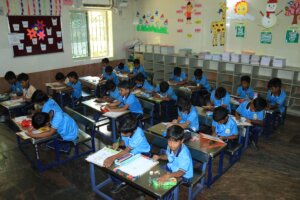
Organised Exam Halls
Classrooms are prepared with seating arrangements, clean writing spaces, and proper supervision.
Concept-Focused Paper Setting
Teachers prepare question papers aligned with ICSE guidelines, ensuring balance between direct, application-based, and analytical questions.
Transparent Evaluation
Students receive corrected papers with comments, helping them understand their performance in detail.
Parent Communication
The school keeps families informed of exam schedules, guidelines, and student progress throughout the academic season.
Parents may contact the school via karthividhyalayaicse@gmail.com or call +91 9445760084. More information is available at https://karthividhyalayaicse.com/.
How Parents Can Support Children During Annual Exams
Parents play an important role in helping students prepare smoothly:
- Establish a calm study routine
- Encourage regular revision instead of last-minute study
- Ensure proper sleep and breaks
- Avoid pressure and comparisons
- Discuss feedback with teachers when needed
Supportive home environments make exam preparation more effective and stress-free.
Conclusion
ICSE schools conduct annual exams in a structured, student-focused manner that emphasises understanding, clarity, and continuous improvement. Through balanced question patterns, practical components, disciplined exam procedures, and clear evaluation guidelines, ICSE ensures that students grow academically rather than merely memorise answers.
Schools like Karthi Vidhyalaya International ICSE School demonstrate how annual exams can be organised with precision and care, helping students gain genuine academic strength and confidence. With the right school environment and supportive home guidance, annual exams become a learning experience rather than a stressful challenge.